Why Cats Pick Certain Laps: Warmth, Trust, Routine
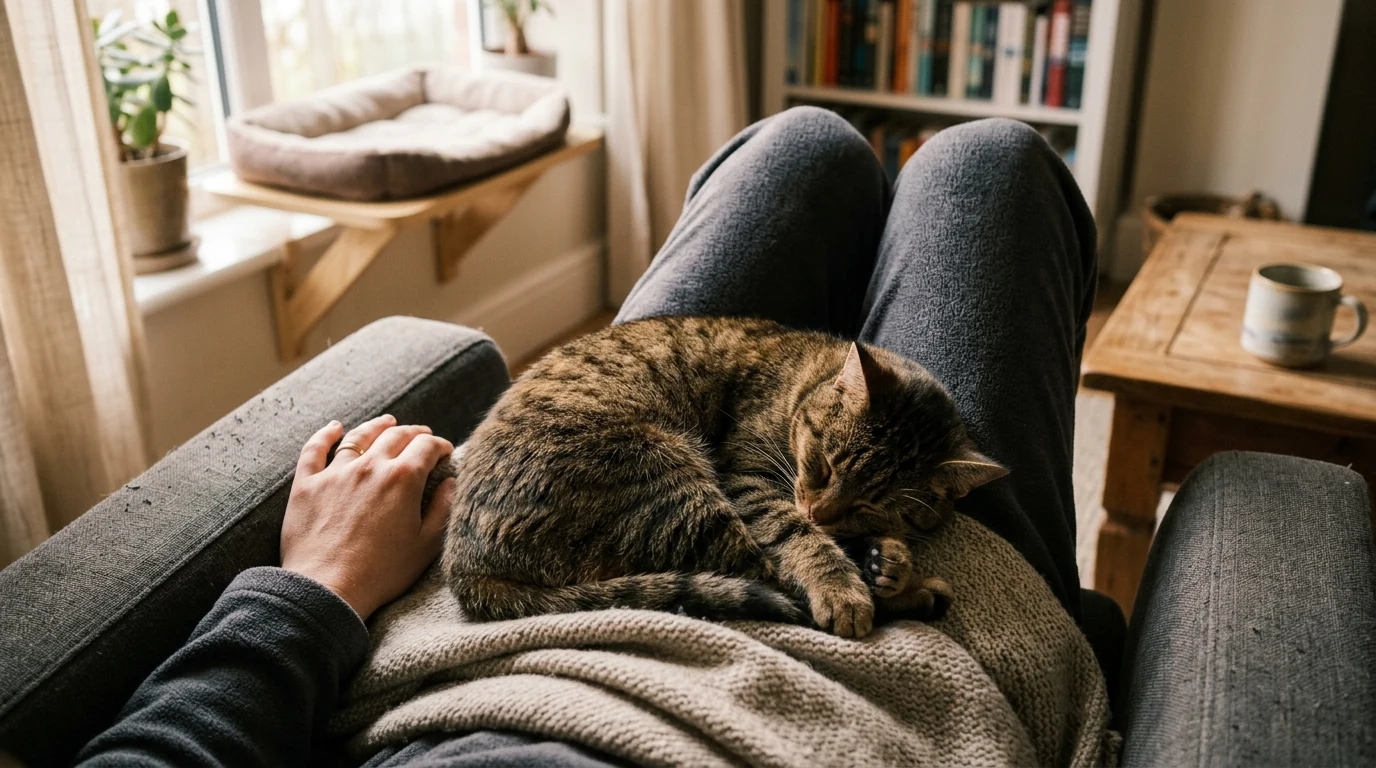
Why Cats Choose Certain Laps: Comfort, Trust, and the Hidden Rules of Lap Time
Some cats hop into one person’s lap every evening and ignore everyone else in the room. Lap choice usually isn’t random or “favorites” in a human sense—it’s a mix of warmth, safety, scent, routine, handling style, and what your cat has learned feels best. Below are the most common reasons cats pick specific laps and practical ways to become a more inviting place to land—without pushing past your cat’s comfort zone.
Lap time is a strategy: what cats gain from choosing a lap
From a cat’s perspective, a lap is a flexible “resource” that can beat furniture in several ways.
- Warmth and temperature stability: Human body heat can be steadier than a couch cushion, especially in cooler homes or near drafty windows.
- Safety and vantage: A lap can act like a small elevated island, making it harder for another pet to sneak up from behind.
- Social contact on the cat’s terms: Lap time offers closeness without the pressure of being picked up, held, or carried.
- Scent comfort: Familiar skin and clothing smells can help a cat settle faster and stay relaxed longer.
- Resource access: The “best lap” might also be near favorite routes—windows, toys, scratching posts, or simply the quietest corner.
The top factors that decide which lap wins
Two people can adore the same cat—and still feel very different to lie on.
- Body heat and “softness profile”: Cats often prefer fleecy pants, plush throws, or thicker blankets over scratchy fabrics or stiff denim.
- Movement style: Fidgeting, bouncing a knee, frequent phone movement, or sudden laughter can make a lap feel unpredictable.
- Posture and surface area: A reclined position or crossed legs can create a wider, steadier platform than sitting upright at attention.
- Sound and vibration: Bass-heavy speakers, loud voices, or keyboard tapping can be “too much,” especially for sensitive cats.
- Hand behavior: Slow blinks, gentle stillness, and petting that pauses often tend to invite; reaching quickly or “restarting” petting repeatedly can push a cat to leave.
- History and learning: The lap that felt safest after a scare—or routinely came with treats—often becomes the trusted default.
Scent, routine, and the “signature” your cat follows
Cats navigate the home with a mental map made of smell, timing, and predictability.
- Clothing scent cues: Detergent, other pets, outdoors, or even a specific lotion can influence comfort. Some cats prefer “home-smelling” clothing; others are intrigued by novel scents.
- Predictable rituals: Many cats attach to the pattern (same chair, same blanket, same hour) more strongly than the person.
- Hormones and stress signals: Cats can react to household tension, illness, or schedule changes by switching preferred laps—or skipping laps entirely.
- Territory mapping: A lap near a favored perch or hallway route may be part of a comfort circuit: window → snack area → lap → nap spot.
For deeper behavior context and household setup tips, reliable references include International Cat Care and the American Association of Feline Practitioners.
What your cat’s lap behaviors are saying
Lap “manners” are communication. Small details often explain why lap time lasts two minutes—or two hours.
Common lap preference patterns (and what to try)
If coat sensitivity or static seems to worsen lap tolerance, consistent grooming can help reduce tangles and skin irritation triggers. See Cat Grooming by Breed: The Ultimate Guide to Caring for Your Cat’s Coat.
Make your lap more inviting without forcing it
Lap preference signals worth a closer look
For more help sorting normal behavior from stress signals, the ASPCA’s cat behavior resources are a solid starting point.
Quick comparison: why a cat might pick one lap over another
| Factor | More likely to choose | Try this adjustment |
|---|---|---|
| Warmth | The warmer person/blanket | Add a fleece throw or sit near a warm (not hot) area |
| Stillness | The calmer, less fidgety lap | Hands relaxed, slow breathing, fewer posture shifts |
| Noise level | Quiet talker/quiet room | Lower TV volume, avoid sudden laughter or clapping nearby |
| Handling style | Gentle, minimal petting | Start with cheek/chin scratches, pause often |
| Scent/routine | The familiar clothing and predictable time | Use the same blanket and sit at the same time daily |
| Safety/escape routes | Lap with easy jump-down access | Angle legs so the cat can leave without obstacles |
A cozy deeper-dive guide for curious cat parents
If a structured reference sounds helpful, Why Cats Choose Certain Laps – A Cozy Cat Behavior Guide (digital download) breaks down common triggers, body-language signals, and simple “one-change-at-a-time” experiments to identify what your cat values most during cuddle time.
FAQ
Does a cat choosing one lap mean they love that person more?
Not necessarily. Cats usually pick laps based on comfort factors like warmth, predictability, scent, and handling style—affection can be part of it, but “best lap” often wins over “favorite person.”
How can someone become a cat’s preferred lap without bribing or forcing?
Be consistently calm and predictable: sit still, use a soft blanket, let the cat initiate contact, and keep petting gentle with frequent pauses. Short, successful sessions—plus respecting the exit—build trust faster than trying to hold a cat in place.
Why does my cat sit on me and then bite or suddenly leave?
Common causes include overstimulation from petting, a sudden noise or movement, or a static shock. Try shorter cuddle sessions with lighter petting, and if the behavior changes abruptly or comes with sensitivity to touch, consider a vet check to rule out pain.









Leave a comment