Most Durable Clothing Fabrics: What Lasts & Why
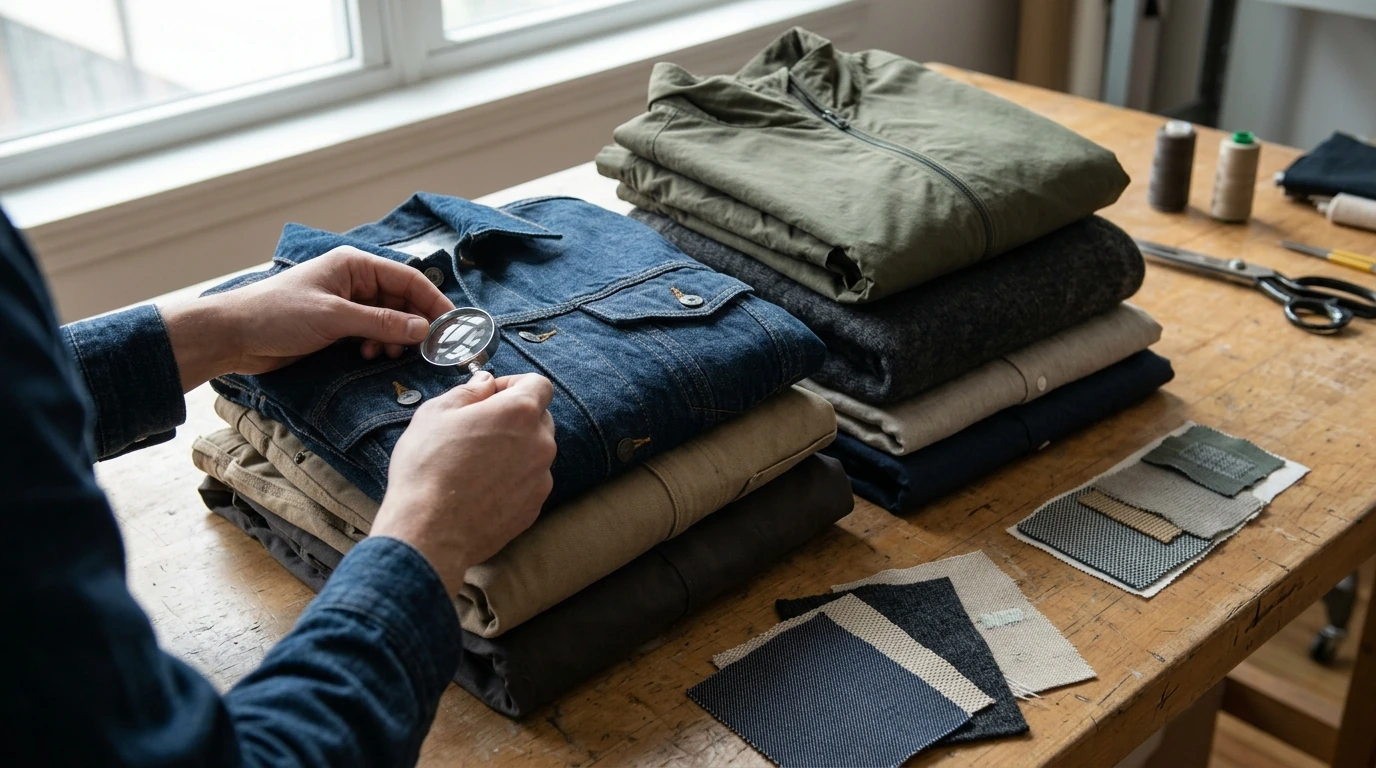
What “long-lasting” means for fabric
Durability isn’t just “thick fabric.” Clothes last longer when the fiber, weave/knit, and finishing details fit real life: rubbing, washing, drying, and daily movement. When you’re comparing garments, look for these durability signals.
- Abrasion resistance: how well the surface resists rubbing at inner thighs, cuffs, underarms, backpack straps, and the seat.
- Tensile strength: resistance to tearing and seam stress at pockets, elbows, crotch seams, and belt loops.
- Pilling and fuzzing: whether fibers work loose and form pills that make a garment look old fast.
- Shape retention: ability to hold fit after repeated wash/dry cycles (baggy knees, stretched collars, warped hems).
- Colorfastness: resistance to fading from detergent, sun, and frequent laundering.
- Repairability: whether holes and worn zones can be patched or darned cleanly (often easiest with denim, canvas, wool, and sturdier knits).
Fast checklist for spotting durable garments on the rack
- Prefer longer fibers and tighter constructions: combed cotton, long-staple cotton, dense knits, and tightly woven twills/canvases usually outlast fuzzy, loosely made fabrics.
- Use fabric weight as a clue (not a rule): very thin tees and lightweight pants often wear through faster at high-friction points.
- Check stitch quality: even stitch length, reinforced seams, bar tacks at stress points, and cleanly finished seam allowances matter as much as the fabric.
- Inspect the surface: loose fuzz, heavy brushing, and very “peached” finishes can feel amazing but may abrade faster in daily wear.
- Stretch with caution: small elastane percentages can improve comfort; high stretch content (especially when heat-dried) can shorten lifespan in knees, seat, and waistbands.
- Care label reality check: “delicate” or “dry clean only” may not survive a lifestyle that demands frequent warm washes and tumble drying.
Materials that typically last the longest (and why)
Fiber choice is the starting point. The same fiber can perform wildly differently depending on yarn quality, fabric density, and finishing, but these materials are reliable durability bets for everyday wardrobes.
Cotton denim and cotton twill
Denim and twill are tightly woven structures that resist abrasion and handle repeated laundering. Heavier weights tend to hold up better for jeans, chore pants, and jackets, and they’re generally easy to repair with patches or darning.
Wool (especially worsted weaves and dense knits)
Wool’s natural crimp helps it bounce back, making it strong on shape retention. In trousers, sweaters, and outer layers, a sturdy wool fabric can look good for years when washed gently and stored properly (Woolmark offers clear care guidance at woolmark.com).
Linen (flax)
Linen is a strong bast fiber that often wears very well over time. It softens with washing while staying breathable; midweight linen typically lasts longer than ultra-light linen in sharp-fold areas.
Nylon
Nylon is known for high tensile strength and excellent abrasion resistance. It’s a common choice for activewear, outerwear shells, and reinforcement panels where rubbing is unavoidable.
Polyester (in tight knits and weaves)
Polyester is strong, stable, and often highly colorfast. It tends to shine in tightly made fabrics (and uniforms) rather than loose, snag-prone knits. Textile Exchange has broader fiber context and resources at textileexchange.org.
Hemp
Hemp is another robust bast fiber, similar to linen, and can be very long-wearing in heavier weaves and quality blends—especially for casual layers and workwear-style shirts.
Durability by fabric type: quick comparison table
| Material / Fabric | Typical strengths | Common weak points | Best uses |
|---|---|---|---|
| Cotton denim / twill | High abrasion resistance, repairable, ages well | Can shrink; friction wear at inner thighs over time | Jeans, jackets, chore pants |
| Wool (worsted, dense knits) | Elastic recovery, warmth-to-weight, resists odors | Can felt/shrink if washed hot; moth risk | Sweaters, trousers, coats |
| Linen (flax) | Strong fiber, breathable, improves with wear | Wrinkles; can abrade at sharp folds if very lightweight | Shirts, summer trousers, dresses |
| Nylon | Excellent tensile strength and abrasion resistance | Heat sensitive; can snag depending on knit | Activewear, outerwear, bags, reinforcements |
| Polyester (tight knit/woven) | Colorfast, stable, durable, quick-dry | Can pill in some knits; retains odors | Tees, fleece alternatives, uniforms |
| Hemp | Strong, breathable, often long-wearing | Can feel stiff initially; quality varies | Work shirts, pants, casual layers |
| Rayon / viscose | Soft drape, comfortable | Weaker when wet; can abrade and shrink/warp | Occasional wear tops, lined garments |
| Acrylic | Lightweight warmth | Pills easily; can look worn quickly | Low-friction knits, accessories |
Blends and finishes: when they help (and when they hurt)
Match materials to the way clothes wear out
Care habits that add years to durable fabrics
Printable checklist for shopping and closet audits
Shop digital guides and practical checklists
- Long-Lasting Clothes Materials Checklist: Discover What Clothing Materials Last the Longest ($4.99)
- Cat Grooming by Breed: The Ultimate Guide to Caring for Your Cat’s Coat ($11.99)
- How to Talk to Kids About Emotions – Practical Parenting Guide ($12.99)
FAQ
What clothing material lasts the longest for everyday wear?
For most wardrobes, tightly woven cotton (denim/twill), sturdy wool constructions, midweight linen, and abrasion-resistant synthetics like nylon or tightly made polyester tend to last the longest. Construction details—dense fabric, strong seams, and reinforced stress points—often decide the winner more than fiber alone.
Do polyester clothes last longer than cotton?
Polyester is typically more stable and colorfast and can outlast cotton in frequent-wash situations, especially in tight knits or weaves. Cotton can be very long-wearing too (and easier to repair), but it’s more prone to shrinkage and abrasion depending on fabric weight and how it’s dried.
Which fabrics pill the least?
Long-staple fibers, tightly spun yarns, and dense fabric constructions usually pill less. Many acrylic knits and some polyester knits pill more, while wool can pill but is often easy to de-pill and restore with gentle care.








Leave a comment