Hobby Goals Planner: Keep Creative Hobbies Fun & Growing
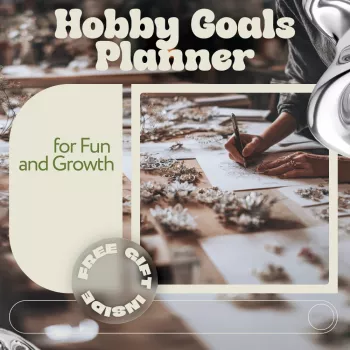
Hobby Goals Planner for Fun and Growth: A Simple System to Keep Creative Hobbies Enjoyable
A hobby should feel energizing, not like another obligation. A flexible planning system helps turn scattered inspiration into steady progress—without losing the fun. This guide breaks down an easy way to set hobby goals, choose projects that match real life, and track growth in skills, confidence, and enjoyment using a printable, fillable digital planner.
What “fun and growth” looks like in a hobby
Most people quit hobbies for a surprisingly practical reason: the hobby becomes hard to start. “Fun and growth” means you’re getting two outcomes at once—enjoyment (play, curiosity, relaxation) and development (skills, consistency, finishing projects)—without letting either one crush the other.
Creative hobbies, especially, thrive with exploration goals as much as results-based goals. Instead of only “finish a painting,” add “experiment with three brush techniques” or “try a new color palette.” These lower-pressure targets keep momentum alive when inspiration is messy.
One of the simplest antidotes to all-or-nothing thinking is defining a “minimum enjoyable session.” Pick a time that’s short enough to feel easy (often 10–20 minutes) but long enough to feel satisfying. When life gets busy, that minimum keeps you connected to the hobby without turning it into a guilt trigger.
To reduce decision fatigue, choose one theme per month. A theme gives you direction while leaving room for play—think “chords” for guitar, “portrait practice” for drawing, “new recipes” for cooking, or “color” for any visual craft.
Set hobby goals that don’t kill motivation
Motivation stays healthier when goals match why the hobby matters. Start with a short purpose statement: what does this hobby give—stress relief, creativity, community, mastery, downtime, or a sense of identity? This becomes your “compass” when you’re tempted to over-plan or over-commit.
Next, pick a small mix of goal types:
- 1–2 outcome goals (a clear finish line)
- 2–3 process goals (a repeatable rhythm)
- optional exploration or connection goals (to keep it fresh)
Add a joy metric to track how sessions felt—energized, calm, frustrated, proud. This matters because enjoyment is data. If you notice you feel calm after sketching but tense after long tutorials, you can adjust before burnout sets in.
Finally, create a “later list” for ideas. This protects your current project from being derailed while reassuring your brain that new inspiration won’t be lost.
| Goal type | Example | Best when… |
|---|---|---|
| Process | Practice 15 minutes, 3x/week | Consistency matters more than speed |
| Outcome | Complete one finished piece this month | A clear deliverable boosts momentum |
| Exploration | Try three new techniques | Stuck in a rut or craving novelty |
| Connection | Join one meetup or share one post | Community and feedback increase enjoyment |
| Maintenance | Organize supplies for 20 minutes | Clutter and setup time block sessions |
A weekly planning rhythm that fits real life
Long-term hobby plans often backfire because they’re too rigid. A one-week focus is more forgiving: it gives structure without becoming a “you failed” scoreboard. Try a simple weekly reset that answers three questions: What’s my focus? When are my easiest windows? What’s my backup plan?
Plan “setup-friendly” sessions to lower friction. Many hobbies stall at the starting line—finding supplies, opening files, clearing the table. A session that’s only “prep tools and set up” still counts, because it makes the next session dramatically easier.
Instead of exact durations, use time ranges like 20–40 minutes. Ranges protect the hobby from perfectionism: if you only have 22 minutes, you still fit inside the plan.
Build a recovery option for busy weeks: a low-effort session such as collecting reference photos, taking tutorial notes, re-stringing an instrument, or organizing materials. Continuity beats intensity when real life gets loud.
Use a planner workbook to capture ideas, track skills, and finish projects
A good hobby planner isn’t a productivity trap—it’s a friction reducer. The right pages make it easier to start, easier to continue, and easier to notice growth that’s otherwise invisible day to day.
Recommended tool: Hobby Goals Planner for Fun and Growth – Digital Download Guide, Goal Planning Workbook, Creative Hobby Planner, Personal Growth eBook, Printable & Fillable.
For extra support around mindset and communication (especially if hobbies are part of family life), these in-stock digital guides can pair well with a gentle planning routine: How to Talk to Kids About Emotions – Practical Parenting Guide and A Friendly Guide to Kids Eating the Same Food Every Day (Digital eBook).
Enjoyment also grows when you’re more present during your sessions; the American Psychological Association’s overview of mindfulness is a helpful primer. For the mechanics of sticking with small routines, this research overview on habit formation and behavior change explains why tiny, repeatable actions are often more effective than big bursts.
Make goals stick with tiny wins and gentle accountability
Common roadblocks (and quick fixes)
FAQ
How does a hobby goals planner help without turning a hobby into work?
A hobby planner can stay playful when it prioritizes flexible process goals, short sessions, and enjoyment tracking. Instead of pushing strict productivity, it reduces friction and decision fatigue so it’s easier to start and easier to keep going.
Can a printable, fillable planner be used on a tablet or computer?
Yes—fillable planners can typically be typed into using common PDF tools on tablets or computers, and printing is optional. Many people mix both: digital entries for weekly plans and printed pages for hands-on project work.
What if motivation comes and goes?
Plan for motivation to fluctuate by using a minimum enjoyable session, a low-effort recovery option, and weekly resets. Tracking which activities feel most energizing also helps you rebuild momentum by focusing on what genuinely pulls you back in.









Leave a comment