Family Bike Outing Checklist: Pack, Plan, Ride Calmly
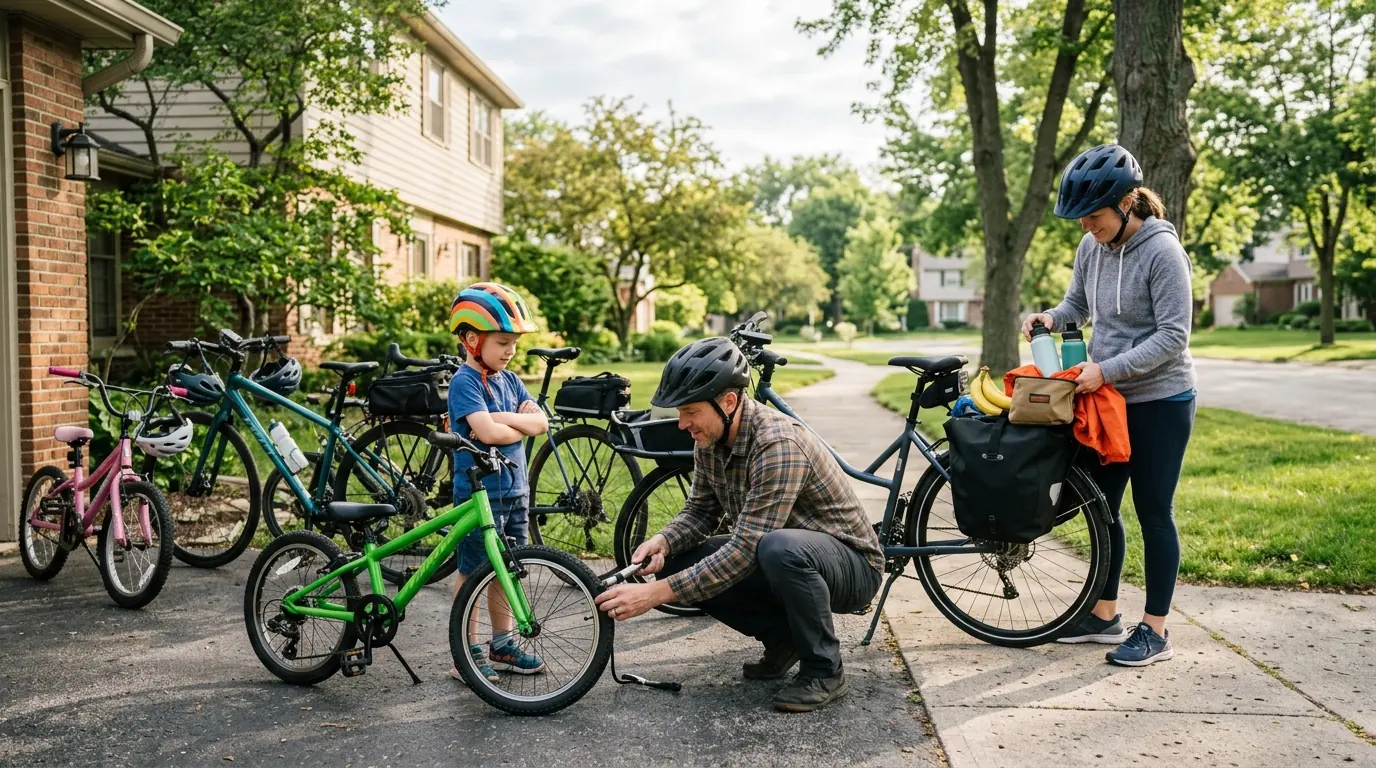
Family Bike Outing Checklist: A Calm, Ready-for-Anything Ride Plan
A successful family ride usually comes down to preparation: safe bikes, comfortable riders, weather-ready layers, and a simple plan for snacks, breaks, and what to do if something goes wrong. Use the checklist below to reduce last-minute scrambling and keep the focus on enjoying the outing together.
Before Leaving: The 10-Minute Safety Check
Do this once at home or in the driveway. It’s quick, repeatable, and prevents the most common “turn back” problems.
- Helmets for every rider: Helmet sits level on the head (not tipped back), straps snug (two-finger rule under the chin), and no wobble when the rider shakes their head.
- Quick bike check (ABC): Air in tires, Brakes working evenly, Chain/crank moving smoothly.
- Fit check for kids: Seat height allows stable starts/stops; handlebars and brake levers are reachable without stretching or “hovering” off the saddle.
- Visibility: Use a front white light and rear red light if you’ll be near dusk, fog, shaded trails, or streets. Add reflectors if any are missing.
- Rules refresher for kids: Stop at driveways, call out “stopping,” pass on the left, hands stay on grips, and ride single file near traffic.
For additional safety fundamentals, the NHTSA bicycle safety guidance and the CDC bicycle safety overview are solid references for families.
Pack List: Essentials for Comfort, Fuel, and Small Emergencies
A family ride feels “easy” when everyone stays fueled, warm/cool enough, and clean enough to keep going. Pack for the least-experienced rider, not the most enthusiastic one.
- Hydration: Water bottles for each rider; consider an electrolyte drink on hot days.
- Snacks: Easy-to-eat, low-mess options (banana, pretzels, trail mix, cheese sticks). Pack one extra snack per child.
- Sun and bug protection: Sunscreen, lip balm, sunglasses, and age-appropriate insect repellent.
- Layers: Lightweight wind/rain shell; warm layer for early mornings; extra socks for kids (wet feet can end a ride fast).
- First aid basics: Assorted bandages, antiseptic wipes, gauze, allergy meds if needed, and blister care.
- Hygiene: Tissues, hand wipes, a small trash bag, and optional packable toilet paper for trail restrooms.
- Navigation and communication: Charged phone, route saved offline if possible, and emergency contact info for each child.
- Kid comfort items: Tiny “break toy” or sticker, chamois cream if anyone is sensitive, and an optional mini seat pad for trailers.
If mealtime expectations are a recurring source of stress (snacks “have to be just right” on ride day), the resource A Friendly Guide to Kids Eating the Same Food Every Day can help simplify snack planning without turning it into a battle.
Repair Kit: Enough to Get Everyone Home
You don’t need a full workshop—just enough to solve the problems that strand families: flats, loose bolts, and minor drivetrain issues.
- Pump (mini) or CO₂ inflator (plus an extra cartridge), and a quick pressure check before leaving.
- Spare tube(s) that match tire size; a patch kit as backup.
- Tire levers and a compact multi-tool (include the hex keys your bikes actually use).
- Chain quick link (master link) and a small amount of lube (optional, but helpful on longer rides).
- For family setups: Tools/keys needed for a trailer hitch, kid seat mounts, or tagalong connections.
- Practice once at home: Removing a wheel, changing a tube, and re-seating the tire bead.
Even one practice run can turn a stressful roadside flat into a calm 10-minute pause—especially with kids watching and waiting.
Route Planning That Works for Kids
The best family routes have “escape hatches,” predictable stops, and minimal surprise stress. A little planning up front prevents the classic late-ride meltdown.
For more everyday riding tips and safe-street reminders, the League of American Bicyclists Ride Smart guidance is a helpful checklist-style reference.
Quick Checklist at a Glance
| Category | Must-have items | Nice-to-have add-ons |
|---|---|---|
| Safety | Helmets, lights/reflectors, basic rules reminder | Hi-vis vest, bell, reflective ankle straps |
| Comfort | Water, layers, sunscreen, sunglasses | Seat pad, chamois cream, extra socks |
| Food | 2 snacks per rider, small trash bag | Picnic blanket, thermos, treats for turnaround point |
| Repair | Pump/CO₂, tube, tire levers, multi-tool | Patch kit, quick link, spare derailleur hanger (advanced) |
| Logistics | Phone charged, route saved, emergency contacts | Offline map app, small power bank |
For a ready-to-print version you can reuse all season, see the Printable Family Bike Outing Checklist.
Day-of-Ride Routine: Make Starts and Finishes Smooth
If frustration or tears show up mid-ride, having a shared “name it and tame it” language can keep things from escalating. How to Talk to Kids About Emotions offers practical scripts that work well during active outings where kids can feel pressured or overwhelmed.
FAQ
How long should a family bike outing be for beginners?
For first-time family rides, aim for 20–45 minutes of moving time with breaks every 20–30 minutes; many younger kids do best with 2–6 miles total depending on terrain. Turn around while everyone still has energy so the ride ends on a confident note.
What is the most important thing to pack besides helmets?
Water is the top priority, followed closely by a way to fix a flat (a pump or CO₂ inflator plus a correctly sized tube). After that, simple snacks and a small first aid kit cover most family-ride hiccups.
How can kids carry their own gear without slowing down?
Use small, light backpacks or baskets for older kids and keep the load to roughly 5–10% of body weight. Put heavier items (tools, extra water, bigger first aid kits) in adult bags so kids can focus on riding smoothly.









Leave a comment