Cycling Safety Checklist: Quick Pre-Ride Scan

Cycling Safety Checklist: A Simple Routine for Every Ride
A consistent pre-ride routine reduces preventable mishaps and helps every ride feel smoother—whether commuting, training, or taking a casual spin. Use the checklist below to scan your gear, your bike, your route, and your mindset in a few minutes, then adjust for weather, traffic, and ride length. For broader, research-based safety guidance, see resources from NHTSA and the CDC.
Before You Roll: 60-Second Readiness Scan
- Confirm destination and approximate ride time; share your route with a friend for longer rides.
- Check weather (wind, temperature drop after sunset, rain probability) and plan layers accordingly.
- Look for alerts on your route: construction, closures, events, school zones, or heavy-traffic periods.
- If riding at dawn/dusk/night, plan for active lighting, reflective elements, and reduced speeds.
- Do a quick body check: hydration level, fatigue, soreness, and any medication that affects balance or reaction time.
Helmet and Personal Protective Gear
- Helmet fit: level on the head, snug all around, no rocking; straps form a “V” under each ear; buckle snug under the chin.
- Replace a helmet after any significant impact or if it’s past the manufacturer’s recommended lifespan.
- Eye protection: clear/low-light lenses for dawn/dusk; tinted for bright sun; ensure lenses are clean.
- Gloves: help grip and protect palms in a fall; choose breathable fabric in heat and insulated versions in cold.
- Footwear: stable sole and secure laces/closures; avoid loose laces that can snag chainrings.
- Optional protection by ride type: knee/elbow pads for trail riding; bright/reflective vest for urban commuting.
Bike Safety Check: The Fast “ABCs”
This quick mechanical scan catches the most common issues before they turn into walk-home problems.
- Air: check tire pressure (use the recommended range printed on the tire sidewall as a guide); inspect for cuts, embedded glass, or bulges.
- Brakes: squeeze both levers; confirm firm feel, adequate pad thickness, and no rubbing or squealing that signals contamination or misalignment.
- Chain and drivetrain: chain lubricated (not gritty or squeaky); quick visual for stiff links; ensure shifting works across key gears.
- Steering and headset: hold front brake and rock the bike; feel for play or knocking; handlebar should turn smoothly without binding.
- Quick releases/axles: confirm wheels are secure; thru-axles fully tightened; quick releases properly closed and not merely “snug.”
- Frame and wheels: quick scan for cracks, dents, loose spokes, and wobble; fix before riding if anything looks suspect.
Visibility and Lighting Checks
- Front white light and rear red light: fully charged or fresh batteries; verify modes and brightness.
- Position lights so they’re visible but not pointed into oncoming riders/drivers; avoid glare at close range.
- Reflectors and reflective accents: add to ankles, wheels, and backpack for motion visibility.
- In rain or fog, use steady mode where appropriate and reduce speed—contrast and depth perception drop.
Road and Trail Awareness: High-Risk Moments
- Intersections: slow down early, make eye contact when possible, and assume a driver may not see you.
- Door zone: keep distance from parked cars; watch for brake lights, occupants, and mirrors.
- Passing and being passed: maintain a predictable line; signal; check behind before moving laterally.
- Surface hazards: wet paint, metal plates, leaves, sand, and potholes—avoid abrupt steering; lighten grip and brake earlier.
- Group riding: keep safe spacing; call out hazards; avoid overlapping wheels; hold a steady pace when others are near.
Weather and Seasonal Adjustments
- Heat: carry extra fluids, use electrolytes on longer rides, and watch for dizziness or chills (heat illness warning signs).
- Cold: protect extremities (hands/feet/ears); dress in layers; keep batteries warmer to preserve light performance.
- Rain: extend braking distance; avoid hard cornering; wipe rims/rotors after the ride; re-lube the chain sooner.
- Wind: anticipate gusts when passing gaps between buildings or large vehicles; keep a relaxed grip and lower speed.
Quick Carry List for Common Problems
Ride-Length Checklist: What to Bring
| Ride length | Must-have | Nice-to-have | Notes |
|---|---|---|---|
| Under 30 minutes | Helmet, lights (if low light), phone/ID | Mini pump/CO₂ | Prioritize visibility and predictable riding |
| 30–90 minutes | Flat kit + pump/CO₂, water | Multi-tool, snack | Plan for changing traffic and weather |
| 90+ minutes | Two flat solutions, water + electrolytes, lights | Quick link, compact first-aid, extra layer | Share route and consider a turnaround time |
After the Ride: Two Minutes That Prevents Next-Ride Issues
Printable Checklist Option
If you prefer a ready-to-use format, the Cycling Safety Checklist (downloadable) is a quick grab-and-go option for consistent checks before every ride.
Helpful Extras for Everyday Riders
- Make the routine automatic: Save and print the Cycling Safety Checklist so you don’t rely on memory when you’re running late.
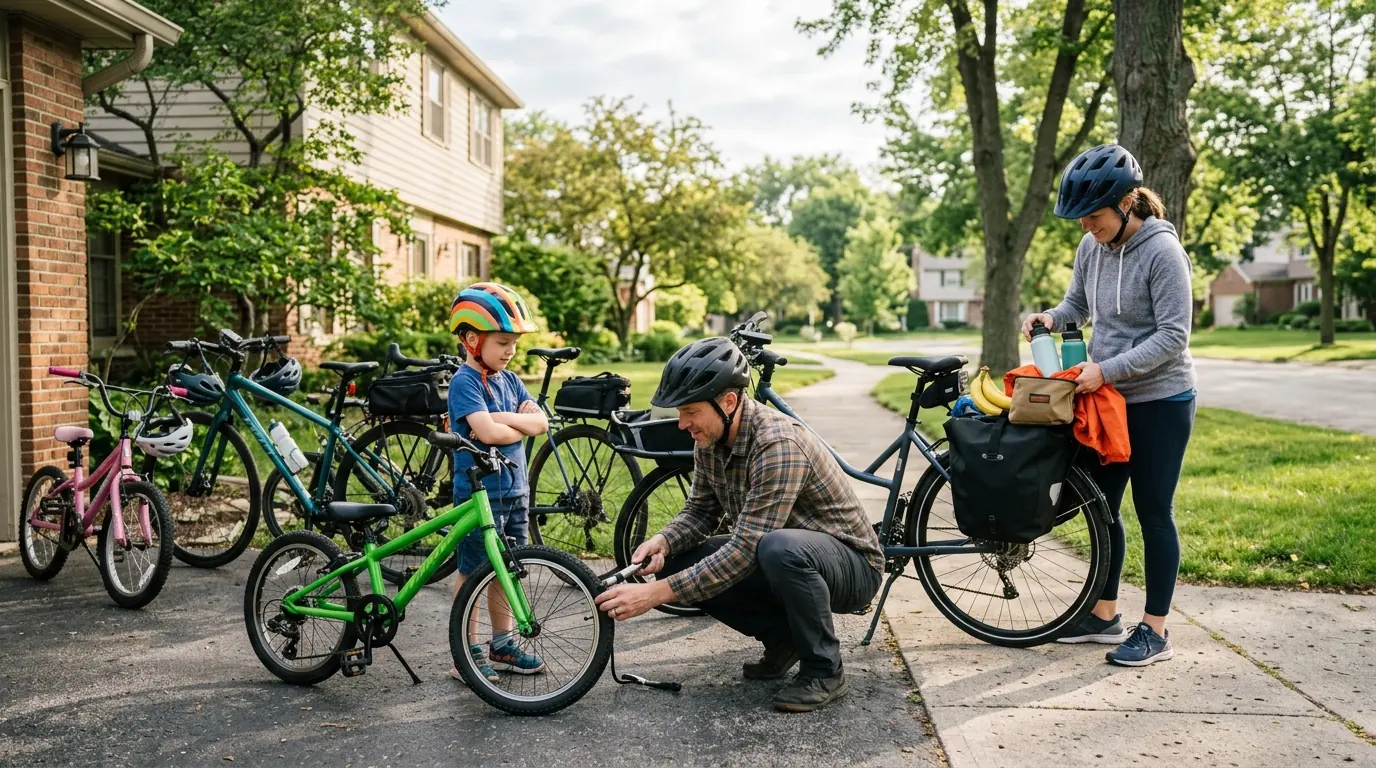
- For family rides: If you ride with kids or teens, calm, clear communication helps when traffic feels stressful. How to Talk to Kids About Emotions can support pre-ride conversations about focus, confidence, and handling nerves on busy streets.
FAQ
What should be checked first before every ride?
Start with a fast scan: helmet fit, tire pressure/condition, brake function, and wheel security. If visibility is reduced, confirm your lights are charged and working before you roll.
How often should bike brakes and tires be replaced?
Replace tires when tread is worn, the casing shows cuts/bulges, or flats become frequent. Replace brake pads when they’re near the wear indicators or stopping power drops; the timeline depends on mileage, weather, and terrain.
What lights are recommended for cycling at night?
Use a bright white front light and a red rear light with enough output for your environment. Aim them correctly, verify you can be seen from a distance, and start each ride with a full charge or fresh batteries.











Leave a comment