Stop Cat Scratching: Redirect Furniture Damage Fast
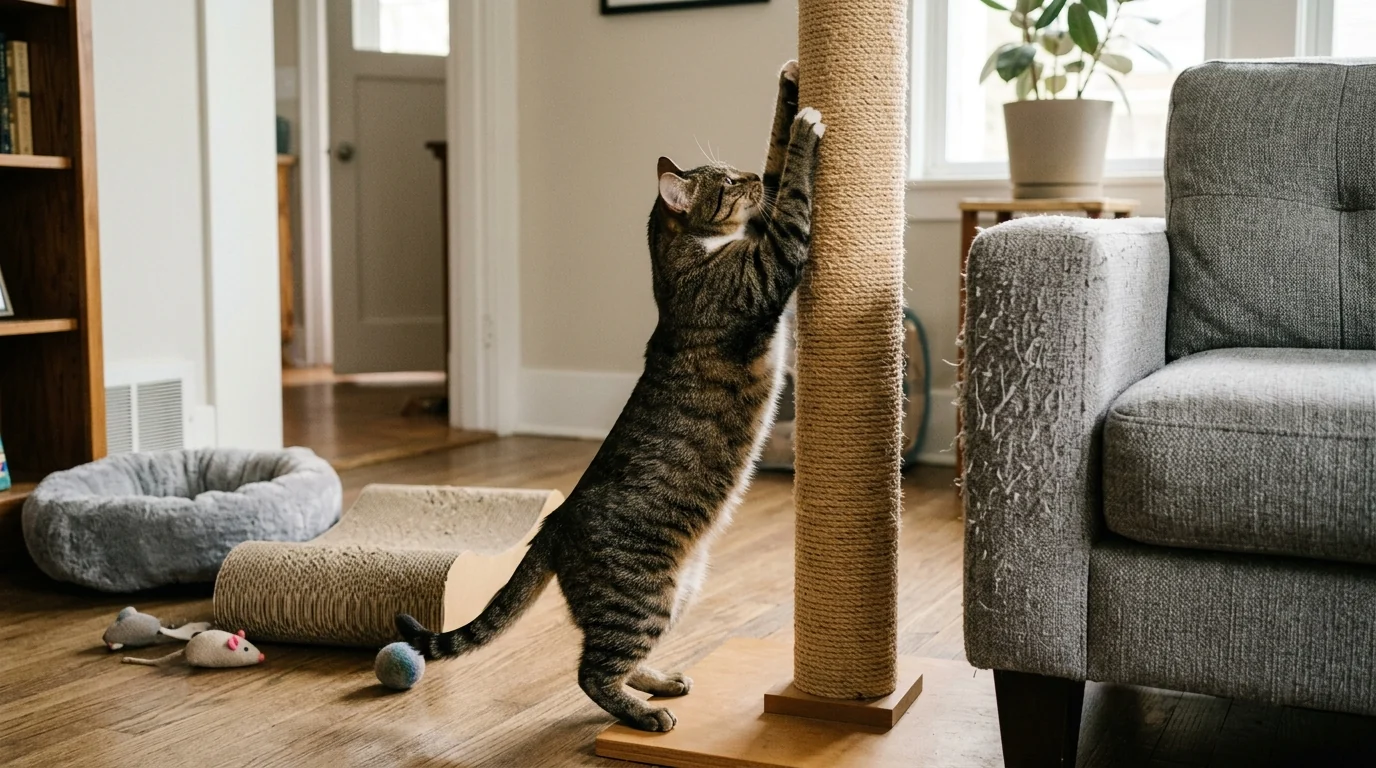
Why Your Cat Targets Your Furniture: Understanding Scratching and Redirecting It
Scratching is normal cat behavior, but it becomes a household problem when couches, chair arms, and doorframes become the preferred “scratch posts.” The most effective fix starts with understanding why scratching happens—territory, claw care, stretching, stress relief—and then setting up the right surfaces, placement, and routines so your cat chooses acceptable options consistently.
What Scratching Does for a Cat (It’s Not “Bad Behavior”)
Scratching meets several core feline needs. When those needs aren’t met in the “right” places, your furniture becomes the most convenient substitute.
- Territory marking: Cats leave visible claw marks and deposit scent from glands in their paws, which helps them feel secure in their space.
- Claw maintenance: Scratching helps shed the outer nail sheath so claws stay healthy and functional.
- Full-body stretch and exercise: Many cats scratch after waking up or right before play to extend shoulders, back, and hips.
- Emotional regulation: Scratching can increase with stress, boredom, conflict between pets, or changes in routine.
For a deeper behavior overview, the ASPCA’s guide to destructive scratching and International Cat Care’s scratching behavior resource both explain why scratching is so persistent—and why redirection works better than punishment.
Why Furniture Becomes the Target
- Texture and resistance: Upholstery, wood trim, and some rugs provide that satisfying “grab,” especially when a cat can hook claws and pull back.
- Location: Cats often scratch where people spend time (like the sofa) and along pathways (doorways, hall corners). These spots are socially and territorially meaningful.
- Height and stability: A tall, sturdy couch arm lets a cat fully extend without wobble—often better than a short, flimsy post.
- Reinforcement loop: If scratching feels good and nothing changes, the spot becomes a reliable habit marker.
- Competition and confidence: In multi-cat homes, scratching can spike around shared resources, favorite sleeping areas, or “choke points” where one cat can block another.
Rule Out Problems That Make Scratching Worse
If scratching suddenly increases, looks frantic, or is paired with new aggression, it’s worth stepping back before assuming it’s purely behavioral.
- Check for pain or skin irritation: Sudden changes can signal discomfort—contact a veterinarian if the behavior shifts abruptly.
- Nail overgrowth: Long claws snag fabric more easily, which can lead to more frequent scratching (and more damage). Regular trims help.
- Stressors: Moves, new pets, schedule changes, loud construction, or litter box issues can elevate scratching frequency.
- Play and enrichment gaps: Under-stimulated cats often channel energy into repetitive behaviors like scratching, climbing furniture, or nighttime zoomies.
Set Up the “Yes” Options First: Scratch Stations That Actually Get Used
The fastest path to better behavior is making the correct option easier and more rewarding than the couch.
- Provide multiple types: Offer at least one vertical post and one horizontal scratcher (cardboard, sisal, carpet-style) to match your cat’s preferences.
- Prioritize stability: Posts shouldn’t wobble. Heavy bases or wall-anchored designs are ideal.
- Get the height right: Many adult cats prefer 28–36 inches or taller so they can fully extend.
- Placement beats quantity: Put scratchers where your cat already scratches and where your cat wakes up, greets you, or transitions between rooms.
- Make it rewarding: Add catnip (if your cat responds), praise calmly, and deliver a treat right after use.
Scratching Solutions Compared
| Option | Best For | Pros | Watch Outs |
|---|---|---|---|
| Tall sisal post | Cats that scratch vertically and stretch high | Durable; satisfying texture; strong habit replacement | Must be stable; place near the problem furniture first |
| Horizontal cardboard scratcher | Cats that scratch rugs/carpets | Inexpensive; easy to place in multiple rooms | Needs replacement as it wears; can be messy |
| Furniture covers/tape protectors | Protecting high-value items during retraining | Immediate barrier; reduces reinforcement | Some cats ignore tape; test fabric safety first |
| Nail trims | Reducing damage from occasional mistakes | Less snagging and tearing; helps older cats | Doesn’t solve motivation; introduce gradually with rewards |
| Environmental enrichment (play, perches) | Bored or high-energy cats | Lowers stress; reduces repetitive behaviors | Requires routine consistency |
Helpful reading for building a plan
If you want a step-by-step approach you can follow and troubleshoot, Why Your Cat Targets Your Furniture – A Practical Guide Explaining Why Does My Cat Scratch Furniture & How to Stop It breaks down common scratching patterns, placement strategies, and realistic timelines.
Make Furniture Unappealing (Without Scaring Your Cat)
Once “yes” options are in place, reduce the payoff of the old habit so your cat naturally switches.
A Practical 10-Minute Daily Plan (Room-by-Room Reset)
If Scratching Is Stress-Driven (Multi-Cat Homes and Sensitive Cats)
Extra Help: Nail Care and Coat Care That Support Better Habits
For coat-specific routines that can make handling easier (and reduce stress behaviors overall), Cat Grooming by Breed: The Ultimate Guide to Caring for Your Cat’s Coat offers practical guidance by coat type and breed needs.
FAQ
Why does my cat scratch the couch right after using the scratching post?
This is often a location and territory cue: the couch is in a high-value social area, so your cat “tags” it even after scratching elsewhere. Place an additional scratcher right next to the couch, reward post use immediately, and use temporary furniture protection to break the reinforcement loop.
Do nail caps or declawing stop furniture scratching?
Nail caps can reduce damage, but they don’t remove your cat’s need to scratch, so scratch stations and enrichment are still necessary. Declawing is not recommended due to potential pain and behavior fallout; the AVMA’s declawing policy explains key concerns and encourages alternatives.
How long does it take to stop furniture scratching?
Many homes see noticeable improvement in 1–2 weeks when scratchers are stable, well-placed, and consistently rewarded. It can take longer when stress is a driver, when multiple cats compete for space, or when scratchers are placed away from the problem zones.












Leave a comment