The No-Gym Athlete Blueprint: Strength Anywhere
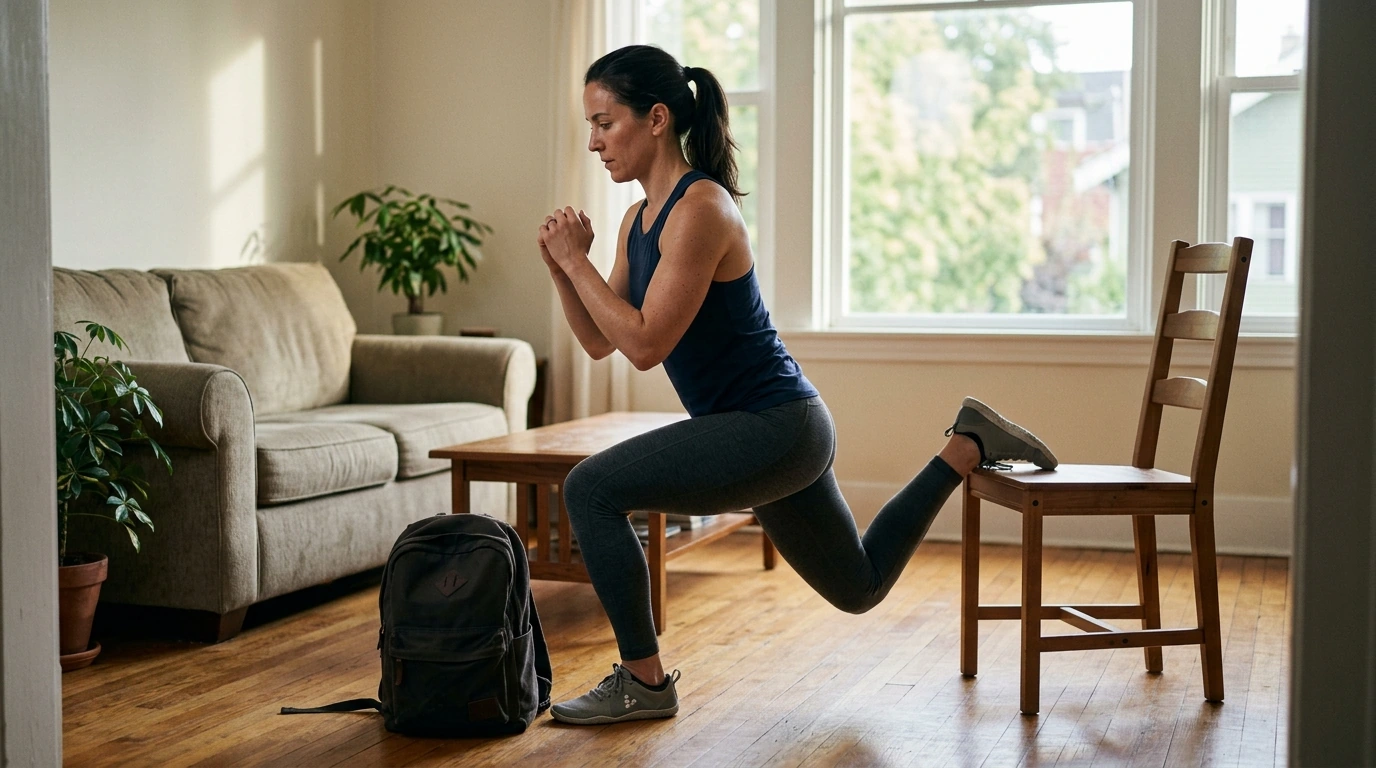
Training Anywhere: The No-Gym Athlete Mindset
Training consistency often breaks down because of time, travel, cost, or crowded facilities. A no-gym approach removes those barriers by focusing on bodyweight strength, simple conditioning, and repeatable progressions that fit real schedules—at home, outdoors, or on the road. The goal isn’t to “make do” without equipment; it’s to build a system you can run almost anywhere, so momentum never depends on a perfect setup.
Health organizations consistently point to the benefits of regular activity for long-term well-being, from cardiovascular health to strength and function. If you want a simple reference point for why moving regularly matters, see the CDC overview on benefits of physical activity and the World Health Organization’s physical activity guidance.
What “no-gym” training actually means
No-gym training builds athletic capacity using bodyweight movements, tempo control, leverage changes, and short conditioning sessions rather than machines. Instead of chasing variety, it relies on a small set of repeatable patterns you can practice often:
- Squat/lunge
- Hinge
- Push
- Pull
- Carry
- Core/bracing
- Locomotion (crawls, marches, short sprints when appropriate)
Progress comes from measurable variables you can track without a barbell: reps, sets, rest, range of motion, tempo, density (work per time), and complexity. You also plan for the environment you actually have—living room, park, hotel room, stairs, or a small patch of floor.
Progression knobs that replace adding weight
| Progression method | How to apply it | Example |
|---|---|---|
| Range of motion | Increase depth or lengthen the movement path | Elevate feet for push-ups or progress from partial to full squat depth |
| Tempo & pauses | Slow the lowering phase or add pauses at hardest points | 3–5 second eccentric push-ups; 2-second pause at the bottom of a split squat |
| Leverage & stability | Make the position more challenging by changing body angle or support | Pike push-ups → wall-supported handstand holds; single-leg RDL variations |
| Density | Do the same work in less time or more work in the same time | 10-minute EMOM or reduce rest from 90s to 60s |
| Complexity | Combine patterns or add coordination demands | Lunge + knee drive; bear crawl patterns |
| Volume | Add sets or weekly sessions while keeping form crisp | 3 sets → 4 sets on primary movements |
Who benefits most from this style of training
- Busy schedules: short sessions that still drive adaptation when repeated consistently.
- Travel and limited space: routines that work in a hotel room or outdoors with no special setup.
- Beginners: simple patterns with clear regressions and easier learning curves.
- Former athletes returning: structured conditioning without overuse from high-impact volume.
- Anyone rebuilding habits: less friction and decision fatigue, which makes follow-through more likely.
Core movement patterns and smart substitutions
You don’t need a long exercise list—you need dependable options for each pattern.
- Squat/lunge: bodyweight squat, split squat, step-up using stairs or a stable chair.
- Hinge: hip hinge practice, glute bridge/hip thrust, supported single-leg RDL pattern.
- Push: incline push-ups → floor push-ups → feet-elevated push-ups; pike push-up progressions.
- Pull (without a pull-up bar): towel rows around a sturdy post, carefully tested table rows (only if truly stable), isometric towel pulls, backpack rows.
- Core and bracing: dead bug, plank variations, side plank, hollow holds, carries with a backpack.
If pulling options are limited, prioritize shoulder-friendly volume control: don’t let pushing work wildly outpace your pulling substitutes, and include upper-back mobility (thoracic rotation and gentle shoulder blade control work) in warm-ups.
A simple weekly structure that keeps progress moving
A practical target is 3–5 sessions per week, alternating strength-focused days and conditioning-focused days. Keeping strength sessions full-body increases frequency and skill practice without needing marathon workouts.
- Strength days (2–3x/week): full-body, controlled tempo, stop most sets with 1–2 reps in reserve.
- Conditioning days (1–2x/week): short intervals, brisk incline walks, stair repeats, or low-impact circuits.
- 4-week cycle: build for 3 weeks, then deload in week 4 by reducing volume (fewer sets or shorter finishers) while keeping the movements.
Session templates that fit 20–40 minutes
Template A (Strength + short finisher)
Template B (Density day)
Recovery, mobility, and staying injury-resistant
Making it sustainable: habits and environment design
A ready-to-follow guide: The No-Gym Athlete
If you want a structured approach that’s designed specifically for training without a gym, The No-Gym Athlete lays out practical progressions and repeatable session structures for home, travel, and outdoor workouts. It’s most effective when you pair it with simple tracking—reps, rest, and which progression method you’re using—so improvements stay visible week to week.
Related digital guides for busy home routines
- How to Talk to Kids About Emotions (helpful for parents building calmer, more consistent household rhythms).
- A Friendly Guide to Kids Eating the Same Food Every Day (practical support for families trying to reduce mealtime friction while keeping routines steady).
FAQ
Can strength be built without weights or machines?
Yes. You can apply progressive overload by increasing range of motion, slowing tempo, changing leverage, adding density (more work per time), or increasing weekly volume. Extra load can also be improvised with a backpack, but it isn’t required to get stronger.
How many days per week should a no-gym plan be done?
Most people progress well with 3–5 days per week, depending on recovery and stress. Alternating full-body strength days with conditioning days—and using a lighter deload week every fourth week—helps keep it sustainable.
What if there’s no safe way to do pull-ups or rows at home?
Use alternatives like towel isometrics, backpack rows, and carefully chosen towel row setups around a truly sturdy post. Keep pushing volume reasonable, add shoulder-friendly mobility, and focus on controlled reps rather than forcing unsafe setups.










Leave a comment