Learn Any Hobby Faster With AI: Plans, Practice, Progress
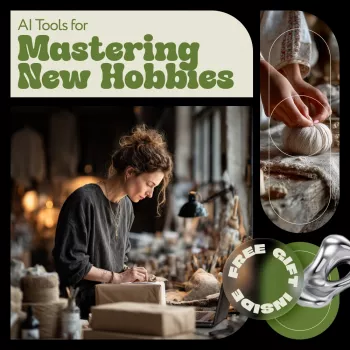
AI Tools for Mastering New Hobbies: A Smart Guide to Learning Faster
Starting a new hobby is exciting until progress feels slow, practice gets inconsistent, or learning resources become overwhelming. AI can simplify the process by turning vague goals into a plan, giving instant feedback, and helping track progress—without replacing the joy of hands-on practice. Whether you’re learning watercolor, training for a 5K, tackling beginner guitar, picking up a language, or finishing your first DIY build, the right AI workflow helps you practice more consistently and improve faster.
Pick the Hobby Goal That Actually Fits Real Life
Most beginners don’t fail because they lack talent—they choose goals that don’t match their schedule, budget, or energy. Start by defining a clear outcome: a finished song, a conversational level in a language, a completed woodworking project, or a small series of paintings that show progress.
- Set constraints upfront: weekly time available, budget for gear, and your preferred learning style (video, reading, guided drills, or projects).
- Turn “learn X” into a 2–4 week milestone: ask AI to translate your outcome into a measurable checkpoint plus a 10–20 minute daily routine.
- Create a “minimum viable hobby” setup: the simplest set of tools and space needed to practice today (not someday).
Build a Personalized Learning Plan in Minutes
A good plan reduces decision fatigue. Instead of collecting endless resources, use AI to build a simple progression: fundamentals first, then targeted drills, then small projects that combine skills.
- Request two learning paths: a project-based route (make small finished things) and a drill-based route (repeat a focused skill until it clicks).
- Match your energy patterns: short weekday sessions, longer weekend sessions, or morning-only practice if evenings are unreliable.
- Add a review loop: reserve one session per week for revisiting mistakes—no new material allowed.
This approach aligns with the idea of deliberate practice—focused, feedback-driven training that targets weaknesses rather than repeating what already feels comfortable. For a quick overview of the concept, see the APA’s definition of deliberate practice.
Use AI as a Coach, Not a Replacement
AI works best as a training partner: it suggests exercises, explains concepts, and helps troubleshoot. The actual skill still comes from real reps—running the miles, playing the chords, painting the strokes, or cutting the wood.
- Ask for error-spotting checklists: posture cues for fitness, common chord transition issues for guitar, brush control points for painting, or pronunciation traps for language learning.
- Change one thing at a time: pick a single correction to focus on for the next session, instead of trying to fix five issues at once.
- Create “if–then” rules: if motivation drops, then do a 5-minute micro-session instead of skipping entirely.
Choose the Right AI Tool Type for the Hobby
Different hobbies need different support. Structured learning tools shine for languages and theory-heavy skills, while creative tools help generate prompts and references. Performance skills benefit from repetition tracking and timing support, and hands-on DIY benefits from summarization and safety checklists.
AI Tool Types and What They’re Best For
| Tool type | Best use | Example outputs to request |
|---|---|---|
| Planning & curriculum builders | Turning a goal into a stepwise roadmap | “4-week plan with daily 15-minute sessions and weekly project” |
| Practice prompt generators | Keeping sessions fresh and focused | “10 drills for shading gradients from easy to hard” |
| Feedback & analysis assistants | Identifying mistakes and next fixes | “Checklist to evaluate swing timing and wrist position” |
| Study & memory tools | Retaining terms, techniques, and theory | “Flashcards + spaced repetition schedule for key concepts” |
| Project assistants | Completing real outputs sooner | “Material list + safety checklist + step sequence for a beginner build” |
Design Practice Sessions That Produce Fast Progress
Fast improvement comes from sessions that are short, specific, and repeatable. A simple format keeps you moving even on low-energy days.
For memory-heavy hobbies (language, music theory, terminology), spaced repetition helps you review at the right time before forgetting. A general overview of how memory works appears in Britannica’s learning and memory content: Spaced repetition and memory concepts.
Track Progress Without Killing Motivation
If your hobby is fitness-related, prioritize safe progression and recovery. For baseline health guidance, reference the WHO Guidelines on Physical Activity and Sedentary Behaviour.
Avoid Common Mistakes When Learning with AI
A Ready-to-Use Weekly Template (Works for Most Hobbies)
A Practical Guide That Pulls It All Together
If you want a complete, structured system—goal setting, tool selection, practice design, and progress tracking—start with AI Tools for Mastering New Hobbies – Smart Guide to Learning Faster with AI. It’s designed for beginners who want clarity and a repeatable method that can be reused across different hobbies as your interests change.
For households where routines and motivation matter, pairing learning systems can help. How to Talk to Kids About Emotions supports calmer, more consistent communication around frustration and setbacks, and A Friendly Guide to Kids Eating the Same Food Every Day can be useful when building steadier routines that keep energy and habits predictable.
FAQ
Can AI really help learn a new hobby faster?
Yes—AI can speed up progress by quickly creating a realistic plan, offering structured drills, and helping you diagnose common mistakes. The improvement still comes from consistent practice and real-world repetition.
What’s the best way to use AI without getting overwhelmed?
Choose one primary tool type, cap planning time each week, and follow a simple weekly template. In each session, focus on one improvement target so progress stays clear and manageable.
Is it okay to use AI for creative hobbies like drawing or music?
Yes—AI works well for references, practice prompts, and critique checklists, while your taste and decisions drive the final result. Use it to build skills and generate options, not to replace originality.










Leave a comment