Women’s Long Sleeve Yoga & Running Top: Fit and Fabric
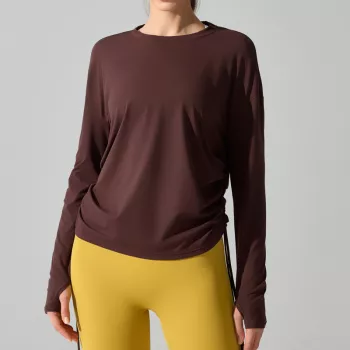
Women’s Long Sleeve Yoga Running Top: Comfort, Coverage, and Performance for Every Workout
A long sleeve top that can move from yoga to running has a tricky job: it needs to feel gentle on skin, flex smoothly through deep stretches, and still manage sweat when your heart rate climbs. The right choice delivers coverage without cling, stays put through forward folds and arm swings, and layers easily when conditions change. Below is a practical breakdown of what to prioritize—fit, fabric, features, styling, and care—so your top performs from warm-up to cooldown.
What Makes a Long Sleeve Top Work for Both Yoga and Running
Yoga and running challenge apparel in different ways. Yoga asks for stretch and stability during bending, twisting, and overhead reaches, while running adds repetitive motion, sweat, and potential friction. A hybrid long sleeve top bridges both by balancing movement and structure.
- Stretch and recovery: The fabric should extend comfortably in poses and snap back after wear so elbows, hems, and cuffs don’t get baggy.
- Moisture management: Wicking and quick-dry performance help during intervals, hills, and heated flows—especially when you cool down quickly after effort.
- Coverage and stability: A secure hem and steady sleeves reduce mid-workout adjusting during inversions, planks, and running strides.
- Chafe reduction: Smooth seams, a soft hand feel, and a fit that doesn’t flap or bunch can limit irritation over longer sessions.
- Versatility: It should layer under a jacket or vest for a chilly start, then feel breathable enough to wear solo indoors.
Yoga vs. Running Needs: Quick Feature Match
| Feature | Why it matters for yoga | Why it matters for running | What to look for |
|---|---|---|---|
| 4-way stretch | Supports deep range of motion | Allows natural stride and arm swing | Elastane/spandex blend; good snap-back |
| Breathability | Comfort during flows | Helps regulate heat on runs | Lightweight knit; ventilation zones if available |
| Sweat wicking | Keeps fabric from feeling clammy | Reduces chill after intervals | Quick-dry fibers; smooth inner face |
| Long hem/coverage | Stays in place in forward folds | Less ride-up while running | Slightly longer length; stable waistband/hem |
| Thumbholes (optional) | Sleeves stay aligned in poses | Adds hand coverage in cool weather | Comfortable opening; not too tight |
Fit and Feel: How to Get the Right Size and Silhouette
Fit is where “almost perfect” tops fail. Too loose, and fabric shifts and rubs; too tight, and it can restrict breathing or dig in during twists. Aim for a silhouette that stays calm on the body while still letting you move freely.
- Choose close-to-body vs. relaxed: A closer fit tends to reduce bounce and friction for running, while a slightly relaxed fit can feel cooler and more forgiving during yoga.
- Check shoulders and sleeves first: Seams should sit near the shoulder edge. If the fabric pulls when you lift your arms overhead, sizing or cut may be off.
- Do the “reach and twist” test: Raise both arms, rotate your torso, then mimic a running stride. You want no binding across the chest, underarms, or upper back.
- Prioritize hem security: A slightly longer cut supports coverage in forward folds and helps prevent ride-up on the run.
- Leave smart layering room: If you’ll wear it over a sports bra and under a jacket, avoid an overly compressive fit that makes breathing feel constrained.
If you frequently train outdoors, it also helps to consider layering basics—how your base layer, mid layer, and shell work together—so you stay comfortable when conditions change. REI’s overview on layering basics is a helpful refresher for planning outfits across seasons.
Fabric and Performance Details to Prioritize
Two tops can look similar on a hanger but feel completely different once you start moving. Fabric and construction details influence comfort more than most people expect—especially for long sleeves that stay in contact with your arms for the entire session.
Comfort also depends on how hard you’re working. If your training intensity varies from easy jogs to faster intervals, it can help to understand how to gauge effort so you can adjust layers accordingly. Mayo Clinic explains practical ways to monitor effort in its guide to exercise intensity.
Outfit Pairings for Studio, Road, and Everything Between
When you’re training longer or sweating more, staying ahead of hydration supports comfort and recovery. The American College of Sports Medicine provides guidance on selecting and effectively using hydration for fitness.
Care Tips to Keep Stretch, Shape, and Softness
Women’s Long Sleeve Yoga Running Top: A Simple Option for Daily Training
- Designed for easy switching between yoga sessions and runs.
- Long sleeves add coverage for cool starts and relaxed cooldowns.
- A practical staple for a mix-and-match workout capsule.
- See the product page for details, current price, and availability: Women’s Long Sleeve Yoga Running Top (USD 32.67).
More in-stock picks
- Cat Grooming by Breed: The Ultimate Guide to Caring for Your Cat’s Coat
- How to Talk to Kids About Emotions – Practical Parenting Guide
FAQ
Is a long sleeve top too warm for running?
It depends on fabric weight and breathability. In cool weather it can be ideal, and in milder temperatures it often works well for warm-ups or easy runs if the knit is lightweight and wicking. If you overheat easily, pair it with a lighter bottom layer or skip extra outerwear.
Should a yoga-and-running top be tight or relaxed?
A snug, close-to-body fit can cut down on bounce and chafing when running, while a slightly relaxed fit can feel cooler and less restrictive during yoga. The best choice is the one that allows full shoulder and underarm mobility without pulling when you reach overhead.
How can pilling be reduced on workout tops?
Wash the top inside out, use a gentle cycle, and avoid high heat in the dryer. Keep it separate from rough or abrasive items (like towels or garments with zippers), and minimize friction from belts, packs, or repeated rubbing during wear.









Leave a comment