30-Day Yoga Tracker for Beginners: Build a Daily Habit
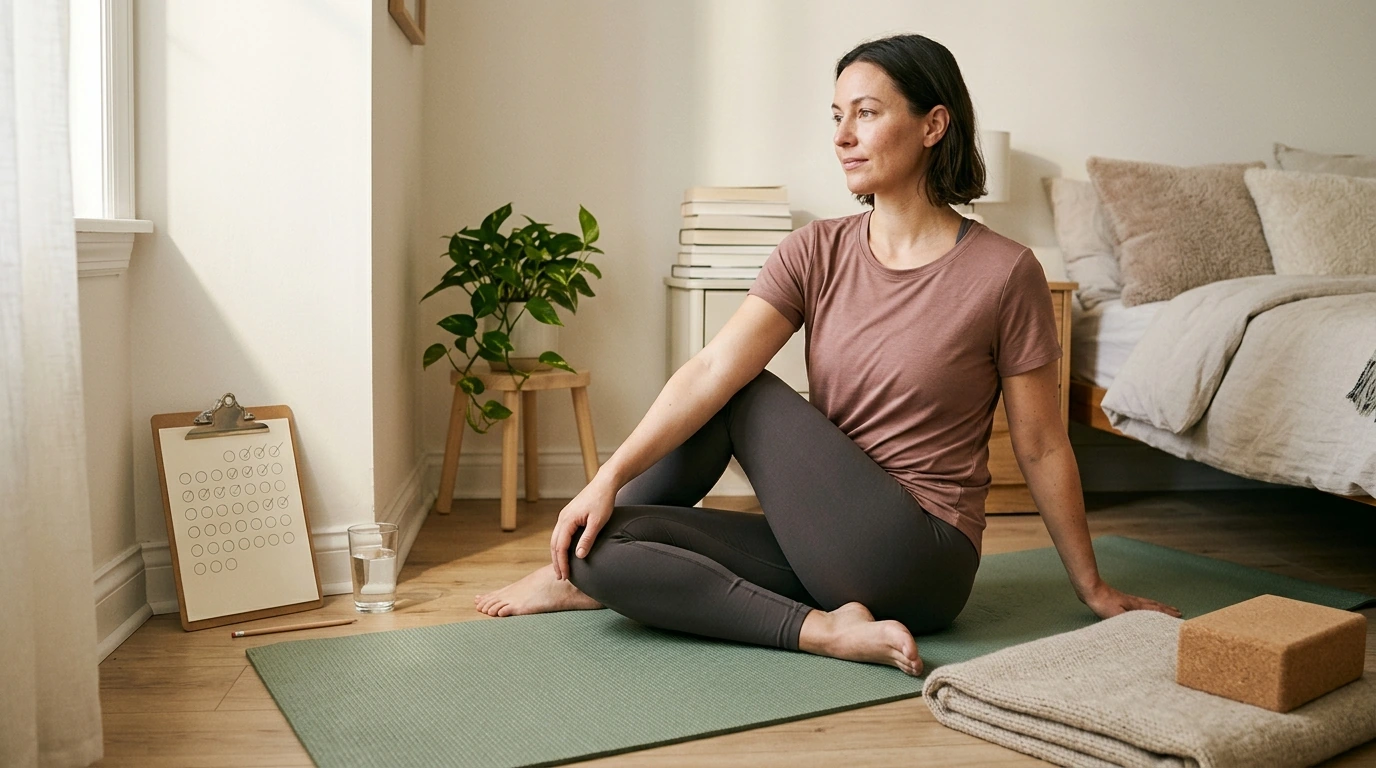
30-Day Beginner Yoga Tracker: A Simple Way to Build a Consistent Practice
Starting yoga is easier when progress feels visible. A 30-day tracker turns scattered sessions into a clear routine by giving a daily plan, a place to log what happened, and quick prompts that keep motivation high—without needing complicated apps or long workouts. Instead of wondering whether you’ve “done enough,” you simply show up, check the box, and watch consistency grow.
Yoga can support flexibility, strength, stress management, and sleep quality over time, especially when practice is steady and gentle. For a big-picture overview of benefits and safety considerations, the National Center for Complementary and Integrative Health offers a helpful summary: Yoga: What You Need To Know (NCCIH). If better rest is one of your goals, Harvard Health also highlights yoga’s role in winding down: Yoga for better sleep (Harvard Health).
What a 30-day yoga tracker does (and why it helps beginners)
A beginner-friendly tracker is less about “perfect poses” and more about removing friction. When the next step is obvious, it’s easier to practice even on low-energy days.
- Creates a clear start-to-finish timeline so practice doesn’t rely on mood or memory.
- Encourages small, repeatable sessions that feel achievable on busy days.
- Builds awareness of patterns: energy levels, stiffness, sleep quality, and stress.
- Reinforces habit formation by making progress tangible day to day.
- Provides gentle accountability without comparing performance to others.
Over 30 days, small notes add up: you may notice mornings feel less tight, your breathing feels smoother, or your shoulders sit lower during the day. That feedback loop is what makes consistency easier the next week.
How to use the tracker in 5 minutes a day
The sweet spot for beginners is simple: decide when you’ll practice, keep sessions short, and write down just enough to see patterns. The tracker becomes a quick check-in—not a homework assignment.
- Pick a consistent time window: morning mobility, lunch reset, or evening wind-down.
- Set a realistic session length (10–20 minutes is enough at the start).
- Before practice: note one intention (e.g., “loosen hips,” “breathe slowly,” “reduce tension”).
- After practice: check off completion, jot one win (even small), and rate how the body feels.
- If a day is missed: mark it honestly and plan the next day—avoid “starting over.”
Daily check-in template (quick logging)
| Log item | Example entry | Why it matters |
|---|---|---|
| Session length | 15 minutes | Keeps goals realistic and consistent |
| Focus area | Hips + hamstrings | Guides pose choices without overthinking |
| Breath/pace | Slow, steady | Supports calm and safer movement |
| Body feel (1–5) | 3/5 | Tracks progress without perfectionism |
| Note | Less tight than yesterday | Builds motivation through small wins |
Beginner-friendly 30-day approach (what to practice each week)
You can pair a tracker with any beginner class schedule, video series, or self-guided routine. The key is repeating fundamentals long enough for your body (and confidence) to catch up.
- Week 1: Foundations—breathing, gentle mobility, simple standing poses, and learning alignment cues.
- Week 2: Consistency—repeat core poses, add balance practice, and increase time slightly if comfortable.
- Week 3: Strength + stability—more holds, simple flows, and mindful transitions (no rushing).
- Week 4: Integration—mix mobility, strength, and relaxation; focus on smoother breathing and confidence.
- Optional add-on: 2–5 minutes of relaxation at the end (legs-up-the-wall or a short savasana).
If you’re not sure what “counts,” keep it basic: a few rounds of easy cat-cow, a gentle forward fold with bent knees, a supported lunge, a simple standing pose, and a short rest. The tracker’s job is to make that repeatable.
Keeping it safe and comfortable
Comfort and control matter more than depth. Beginners often make faster progress by doing less, but doing it consistently and with good breathing.
How to stay consistent when motivation dips
30-Day Beginner Yoga Tracker: what’s included and who it fits best
The 30-Day Beginner Yoga Tracker is designed for people who want structure without pressure. It works like a paper-style plan you can use daily, whether your yoga comes from classes, videos, or your own simple routine.
At-a-glance details
| Item | Details |
|---|---|
| Product | 30-Day Beginner Yoga Tracker |
| Price | 3.99 USD |
| Best for | Building a steady yoga habit with simple daily logging |
| Format | Tracker-style guide (use alongside any beginner routine) |
| Availability | In stock |
If you’re building healthier routines at home alongside yoga, these in-stock digital guides can pair well with a consistency-first approach: How to Talk to Kids About Emotions – Practical Parenting Guide and A Friendly Guide to Kids Eating the Same Food Every Day.
FAQ
How long should a beginner do yoga each day for 30 days?
Ten to 20 minutes a day is a realistic baseline for most beginners. On busy days, a 5-minute minimum (breathing plus a couple of easy poses) keeps the habit intact, and you can gradually add time if your body is recovering well.
Is it okay to do yoga every day as a beginner?
Daily gentle yoga is often fine if you keep it pain-free and vary intensity—some days can be mobility and relaxation rather than strength or long holds. If you’re managing a medical condition or recovering from injury, get personalized guidance before practicing daily.
What if a day is missed on the tracker?
Mark the missed day and continue forward—no restarting required. Treat the next day as a reset and choose a shorter, easier session to rebuild momentum quickly.









Leave a comment