8-Piece Mini Drill Collet Set for Low-Runout Precision
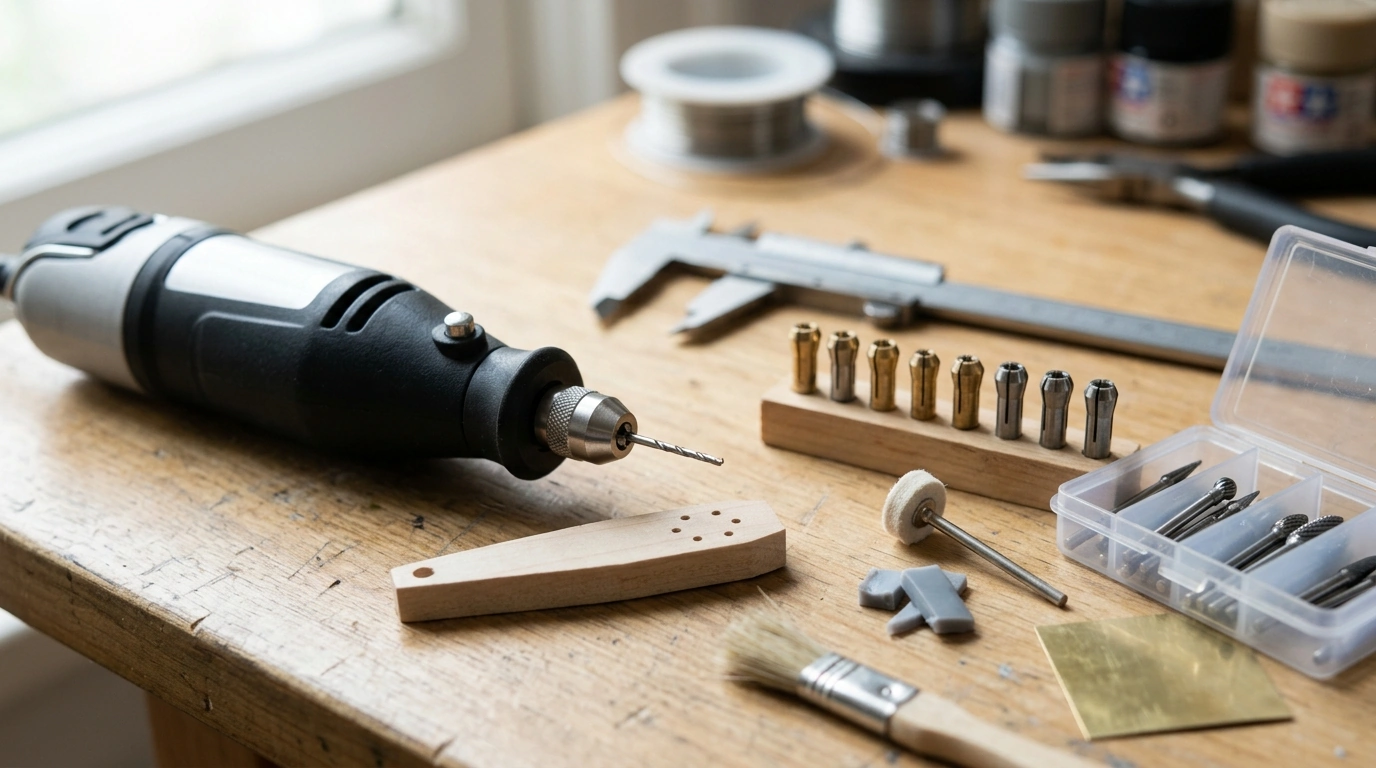
8-Piece Mini Electric Drill Bit Collet Set for Clean, Controlled Precision Drilling
Small-scale drilling and shaping work depends on stable bit grip, low runout, and quick bit changes. An 8-piece mini electric drill bit collet set helps match the collet size to the shank diameter, improving control for detail tasks in wood, plastic, soft metals, resin, models, and jewelry work. When the collet fits correctly, the accessory seats straighter, cuts more predictably, and is less likely to slip or chatter—especially with tiny drill bits where even a little wobble shows up immediately in the hole.
What a mini drill collet set does
- Holds drill bits, burrs, engraving cutters, and polishing mandrels by clamping the tool shank concentrically.
- Reduces slippage compared with “one-size” chucks when shank sizes vary.
- Improves steadiness for fine holes, light deburring, and delicate shaping.
- Speeds up tool changes by keeping common sizes ready without swapping an entire chuck assembly.
Collets work best when they’re treated like precision parts: clean contact surfaces, the correct size, and a smooth, fully seated tightening motion. If you’ve ever tightened a bit only to see it “orbit” when it spins, that’s often a fit or seating issue rather than a motor issue.
What’s included and why 8 pieces matters
- Multiple collet sizes cover a range of common mini-tool shanks, minimizing the need for adapters.
- Better fit between collet and shank can reduce wobble and improve hole roundness.
- A set approach supports mixed work: drilling, engraving, and light routing using different accessories.
- Keeps wear spread across sizes instead of overstressing one collet on mismatched shanks.
In practical terms, “8 pieces” usually means less compromising. Instead of forcing a slightly-too-large shank (risking cracks) or clamping a slightly-too-small shank (risking slip), you’re more likely to have a collet that clamps evenly around the tool.
Quick compatibility checklist before buying
- Confirm the tool type: mini rotary tool, pin vise handle, or micro drill motor (collets must match the tool’s collet nut/interface).
- Match the shank diameter of accessories to the collet size (too small = slip; too large = won’t seat or can crack the collet).
- Check maximum RPM and intended use: collets are best for precision, light-to-moderate loads rather than heavy side-loading.
- Verify that the collet seats fully in the nut and that threads engage smoothly to avoid cross-threading.
If you’re using a rotary tool system, it’s worth reviewing the basics of collets and mandrels from an established accessory reference like Dremel’s accessory information. For safety fundamentals around hand and power tools, OSHA’s guidance is also a solid refresher: OSHA – Hand and Power Tools.
Size matching guide for cleaner results
- Use the closest collet size to the shank diameter; avoid “almost fits” choices.
- Insert the shank deep enough for full contact but keep cutting flutes clear of the collet to prevent binding.
- Tighten firmly and evenly; re-check after the first few seconds of use.
- If runout is visible, remove and re-seat the accessory, then retighten.
Collet fit and common symptoms
| Fit | What it looks like | Likely result | Fix |
|---|---|---|---|
| Too loose | Bit can be twisted by hand after tightening | Slippage, heat, inconsistent hole size | Move to a smaller collet; clean oil/dust from shank and collet |
| Just right | Bit seats straight; minimal visible wobble | Cleaner holes, better control | Proceed; recheck tightness after initial spin-up |
| Too tight | Bit won’t fully insert or requires force | Collet damage, accessory damage, excessive runout | Use a larger collet; do not force |
| Dirty or worn | Tightening feels gritty; uneven clamping | Wobble, chatter, premature wear | Brush out debris; replace the worn collet if needed |
Best uses for an 8-piece mini collet set
- Model making: drilling pilot holes for pins, posts, and small fasteners.
- Jewelry and craft: resin and polymer clay drilling, bead holes, small hardware prep.
- Electronics hobbies: light enclosure drilling in plastic, deburring edges (use low pressure).
- Woodworking detail: small dowel holes, hinge pilot holes on miniatures, clean-up work.
- Soft metals: aluminum, brass, copper drilling with proper bits, lubrication, and slow speeds.
For tiny drill diameters, bit selection matters as much as collet fit. If you need a reference for common drill size standards, a quick chart like Engineering ToolBox’s drill bit sizes can help when converting between fractional, number, and metric sizes.
Technique tips that improve precision immediately
Care, cleaning, and storage
Safety notes for small drilling tools
Product options available
- 8-Piece Mini Electric Drill Bit Collet Set – Precision Drilling Tools ($4.82)
- Cat Grooming by Breed: The Ultimate Guide to Caring for Your Cat’s Coat ($11.99)
- How to Talk to Kids About Emotions – Practical Parenting Guide ($12.99)
- A Friendly Guide to Kids Eating the Same Food Every Day ($19.99)
FAQ
How do I know which collet size to use?
Match the collet to the shank diameter as closely as possible. The shank should slide in without force and clamp firmly so the accessory can’t be twisted by hand after tightening.
Why does my bit wobble even when it’s tight?
Wobble is usually caused by the wrong collet size, debris inside the collet, or the collet not fully seated in the nut. A bent shank or worn collet slots can also create visible runout even when tightened.
Can a collet set be used for engraving and polishing accessories too?
Yes—if the accessory has a straight shank that matches one of the collet sizes and your tool uses the same collet interface. Use the correct size and avoid heavy side pressure so the accessory stays centered and stable.










Leave a comment