Beginner HIIT Progression: 8-Week Low-Impact Checklist
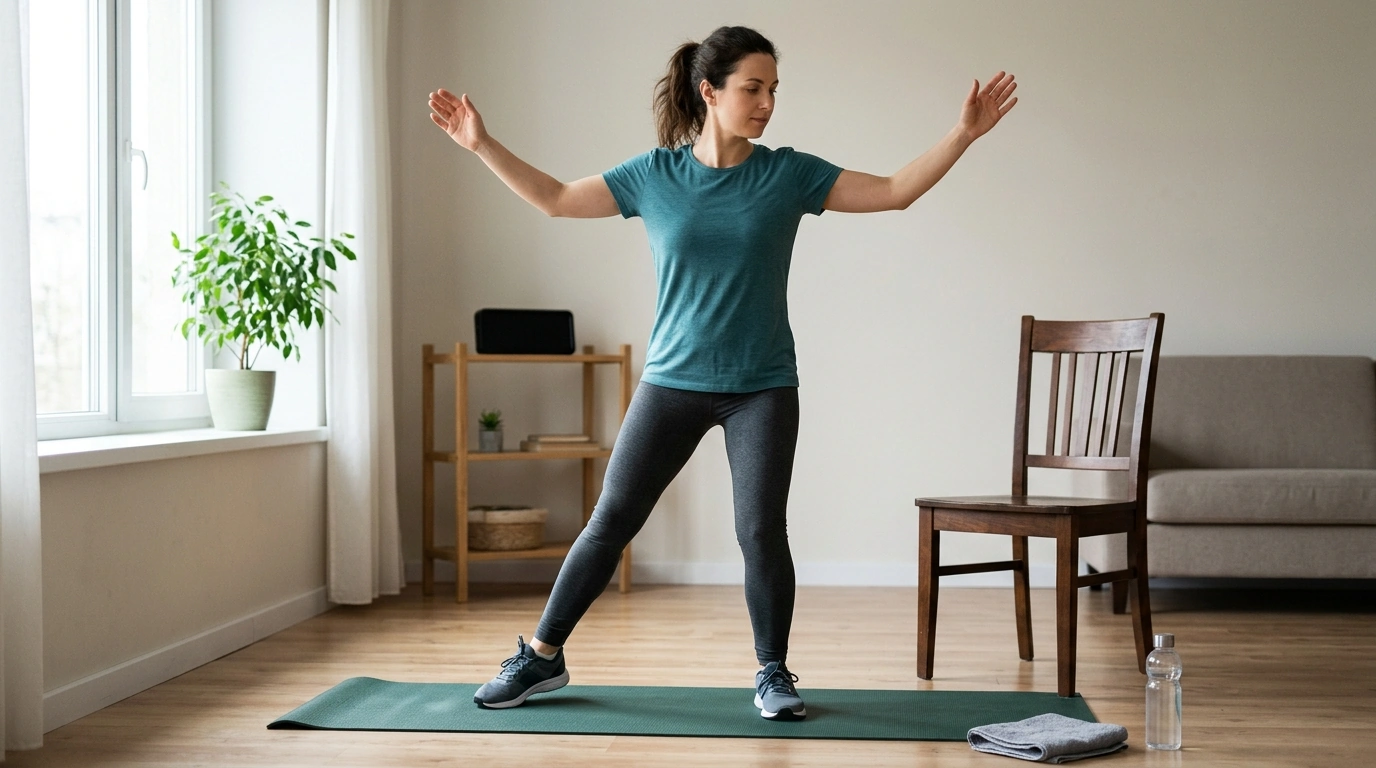
Beginner HIIT Progression Checklist: A Simple Week-by-Week Plan to Build Fitness Safely
A beginner-friendly HIIT progression works best when it is predictable, measurable, and easy to repeat. This checklist-style plan focuses on gradually increasing work time, managing intensity, and protecting joints and recovery. Build consistency first, then add challenge in small steps that still feel doable. For more guidance, see Impact of high-intensity interval training on cardio-metabolic health ….
What “progression” means in beginner HIIT
Progression is a series of small, planned changes that make your workouts slightly harder without sacrificing form. For beginners, the goal isn’t to “go all out”—it’s to train hard enough to adapt while staying safe and repeatable. For further reading, see Feasibility of a progressive protocol of high-intensity interval training ….
- Progression = small steps: add difficulty in a way you can sustain week after week.
- Three beginner-safe levers: (1) longer work intervals, (2) shorter rest, (3) slightly harder exercise variations.
- A good sign you’re progressing appropriately: breathing is elevated during work, form stays solid, and you feel back to normal within a few minutes after finishing.
Before starting: quick readiness and safety checks
A little setup makes HIIT feel better on your joints and easier to recover from—especially if you’re new to intervals.
- Choose low-impact movements first (marching, step jacks, incline push-ups, hip hinges) if knees, hips, or ankles are sensitive.
- Use the talk test: during work intervals, speaking should be difficult but possible in short phrases; during rest, speech should return toward normal.
- Stop and scale back if sharp pain, dizziness, chest pain, or unusual shortness of breath occurs; seek medical guidance when needed.
- Warm up 5–8 minutes: easy cardio plus dynamic mobility for hips, ankles, and shoulders.
For general weekly activity benchmarks, the CDC’s physical activity basics are a helpful reference. For interval-training context and safety, review the ACSM guidance on HIIT.
The beginner HIIT progression checklist (repeat weekly)
Use this as your simple weekly checklist:
- Schedule 2 sessions/week for the first 2 weeks; add a 3rd session/week only if recovery feels good.
- Pick 4–6 exercises and keep them the same for a full week so progress is easy to track.
- Start around 6–7/10 effort and build toward 7–8/10 over time (no all-out sprints needed).
- Progress only one variable per week: work time OR rest time OR exercise difficulty.
- Keep total hard work under 8–12 minutes early on; beginners improve quickly without long HIIT sessions.
8-Week Beginner HIIT Progression (Low-Impact Friendly)
| Week | Sessions/Week | Work : Rest | Rounds | Total Work Time | Progression Focus |
|---|---|---|---|---|---|
| 1 | 2 | 20s : 70s | 6–8 | 2–3 min | Learn movements, keep impact low, finish feeling capable |
| 2 | 2 | 20s : 60s | 8 | 2:40 | Slightly shorter rest; maintain perfect form |
| 3 | 2–3 | 25s : 60s | 8 | 3:20 | Increase work time; keep intensity moderate |
| 4 | 3 | 25s : 50s | 9–10 | 3:45–4:10 | Add a round; keep joints comfortable |
| 5 | 3 | 30s : 50s | 10 | 5:00 | Increase work time; stay controlled (no sloppy reps) |
| 6 | 3 | 30s : 45s | 10–11 | 5:00–5:30 | Shorter rest; prioritize breathing recovery between rounds |
| 7 | 3 | 35s : 45s | 10–11 | 5:50–6:25 | Increase work time; upgrade one exercise (e.g., incline → floor) |
| 8 | 3 | 40s : 40s | 10–12 | 6:40–8:00 | Balanced work/rest; aim for steady, repeatable effort |
If you want a ready-to-print version you can reuse each week, the Beginner HIIT Progression Checklist makes it easy to track intervals, rounds, and what you’ll adjust next.
Exercise menu: simple options that progress well
Choose 4–6 moves and cycle through them for your rounds. Keep the first week simple; “harder” comes later.
- Lower body: sit-to-stand → bodyweight squat → squat to calf raise → alternating reverse lunge (hold support as needed)
- Hinge/posterior chain: hip hinge → glute bridge → kettlebell/dumbbell deadlift (light) → faster hinge with control
- Upper body: wall push-up → incline push-up → knee push-up → full push-up (small range is fine at first)
- Cardio/low-impact: marching → step jacks → lateral steps with reach → low-impact skaters
- Core: dead bug → bird dog → forearm plank (short) → plank shoulder taps (slow)
How to scale intensity without jumping
Low-impact HIIT can still feel challenging. Instead of adding jumps, use progressions that increase effort without beating up your joints.
- Speed: move a little faster while keeping the same range of motion and control.
- Light resistance: add a mini band or light dumbbells rather than adding impact.
- Range first: earn a deeper squat or more controlled push-up before you try to “win” with pace.
- Density: keep work/rest the same but add 1 round once per week if recovery is good.
Recovery and scheduling that makes progress stick
Beginners usually improve faster by recovering better, not by training longer.
For households balancing routines, a consistent schedule can matter as much as the workout plan. If you’re also building calmer daily habits, How to Talk to Kids About Emotions can support steadier communication around stress, motivation, and “big feelings” that show up during lifestyle changes.
Tracking results: quick metrics that matter
Printable tool to keep the plan effortless
FAQ
How many days per week should a beginner do HIIT?
Start with 2 days per week for 1–2 weeks, then move to 3 days only if recovery feels good. Keep at least one easy day between HIIT sessions.
How long should beginner HIIT intervals be?
A common starting point is 20 seconds of work with 60–70 seconds of rest. Progress by adding 5–10 seconds of work or trimming rest slightly, but keep form solid.
Is HIIT okay for beginners who need low-impact workouts?
Yes—use step-based cardio, marching, hinges, and incline push-ups. Intensity can come from pace, range of motion, and light resistance instead of jumping.












Leave a comment